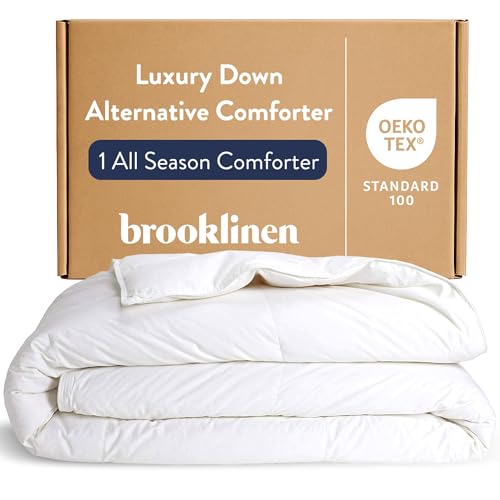
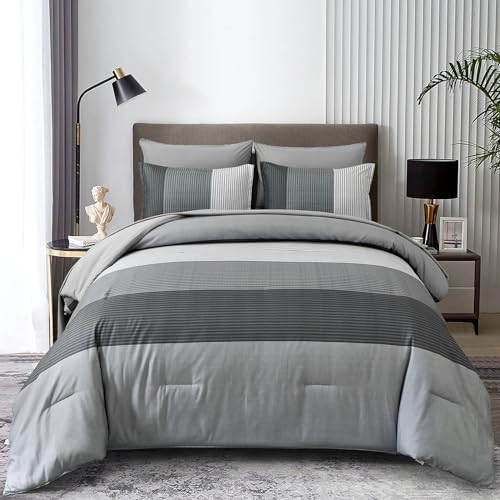
Choose down for the lightest warmth and longest life, and down-alternative if you want a hypoallergenic, easy-wash option at a lower price. Look at fill power for down (600 plus is good) and pick a warmth level for your climate. Size up one step so the comforter drapes over the sides of the bed.
A comforter is the thick, quilted layer that keeps you warm and gives a bed its full, inviting look. The two decisions that matter most are the fill and the warmth level. This guide keeps it simple. To match your sheets, see our bed sheets buying guide.
Down vs down-alternative
Down
Down is the soft cluster under feathers. It is the lightest, warmest and longest-lasting fill, but it costs more and some people are sensitive to it. Quality is measured by fill power; 600 and above is good, 700 plus is premium.
Down-alternative
Synthetic microfiber mimics the feel of down, is hypoallergenic, machine washable and far cheaper. It is the practical pick for allergy sufferers, kids and anyone who wants easy care.
Choose your warmth level
- Lightweight: warm climates and hot sleepers.
- All-season: the safe choice for most homes.
- Extra-warm: cold bedrooms and people who run cold.
Get the size right
Comforters should hang over the sides of the mattress. A common trick is to size up one step, for example a King comforter on a Queen bed, for a fuller drape. Use our mattress sizes chart to confirm your bed dimensions.
Care and construction
Look for baffle-box or sewn-through stitching that stops the fill shifting to the corners. A removable duvet cover keeps a comforter clean and lets you change the look. Browse all options in our comforter reviews.
Frequently asked questions
What is fill power in a comforter?
Fill power measures the loft and quality of down. Higher numbers trap more warmth with less weight. 600 and above is good, and 700 plus is premium.
Is down or down-alternative better?
Down is lighter, warmer and lasts longer; down-alternative is hypoallergenic, machine washable and cheaper. Choose down for performance and alternative for easy care and allergies.
What size comforter should I buy?
Pick one that drapes over the sides of your mattress. Many people size up one step, such as a King comforter on a Queen bed, for a fuller look.