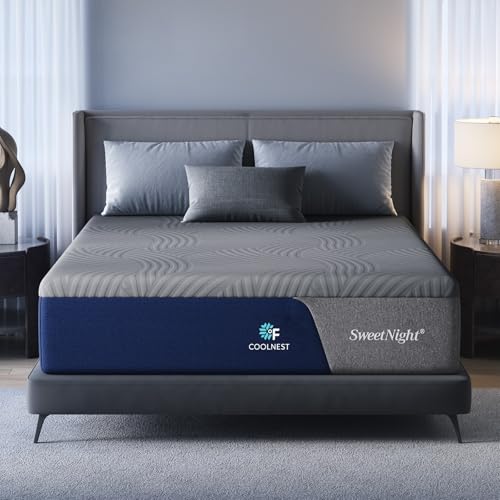
Zoned support means a mattress uses firmer foam or reinforced coils in specific areas, usually the midsection, to support your heavier hips and lower back. Softer zones at the head and legs allow your shoulders and heels to sink in. This keeps your spine aligned in a neutral, straight line while you sleep.
Why it happens
Your body is not a uniform shape. Your hips and pelvis are the heaviest part of your torso, and your shoulders are wider. On a flat, one-firmness mattress, heavier parts sink too deep while lighter parts barely compress. That tilts your spine out of alignment, causing pressure points in your shoulders and hips. Zoned support counters this by putting more resistance under your midsection and less under your head and legs. The result is a mattress that matches your body’s natural curves instead of fighting them.
How to check
Most mattresses do not advertise their zoning clearly. Here is how to spot it:
- Read the layers. Look for terms like “tri-zoned,” “5-zone,” or “reinforced center third” in the spec sheet.
- Feel the surface. Press your hand into the middle third of the mattress. It should feel noticeably firmer than the head and foot ends.
- Check the coil unit. In hybrid mattresses, the center rows of coils are often thicker gauge (firmer) than the outer rows.
- Look at foam encasements. Some all-foam mattresses use a firmer foam block or a different density foam in the center third.
If you are shopping, ask the brand directly or check the detailed construction specs on a site like MattressVetted’s mattress reviews.
Common mistakes
- Confusing zoning with firmness. A firm mattress is hard everywhere. A zoned mattress is only firmer in the middle. You can have a soft mattress with zoned support.
- Assuming more zones are better. Five, seven, or nine zones sound impressive, but the only zones that matter for most people are the shoulder, hip, and leg zones. Extra zones are often marketing fluff.
- Ignoring your sleep position. Zoned support works best for back and stomach sleepers. Side sleepers need the shoulder zone to be soft enough to prevent pressure; a too-aggressive zoned mattress can feel like sleeping on a ridge.
- Thinking zoning replaces firmness selection. You still need the right overall firmness for your weight and sleeping position. Zoning is a refinement, not a fix for a mattress that is too hard or too soft overall.
When a new mattress makes sense
Not everyone needs zoned support. But you should consider it if:
- You wake up with lower back pain or hip soreness and your current mattress feels flat or too soft in the middle.
- You are a back or stomach sleeper over 150 pounds. Heavier bodies compress foam more, so the center third needs extra reinforcement.
- You sleep on your side and your hips sink too deep, causing your lower back to arch.
- You share a bed with a partner who has a very different body type. Zoned support can help both of you stay aligned on the same surface.
If you are already shopping, look for a mattress with clear zoning in the construction. Many of the best options are hybrids with reinforced center coils. Check our mattress buying guide for more on choosing the right construction type.
| Sleep Position | Zoned Support Benefit | Risk Without Zoning |
|---|---|---|
| Back sleeper | Keeps hips from sinking, spine stays neutral | Lower back arches, morning pain |
| Stomach sleeper | Prevents hips from dropping, avoids back strain | Hips sink, spine curves like a hammock |
| Side sleeper | Shoulders sink, hips supported, spine straight | Shoulder pressure or hip misalignment |
Frequently asked questions
Does zoned support help with pressure points?
Yes, when done correctly. Softer zones under your shoulders and legs reduce pressure on those bony areas. Firmer support under your hips prevents them from sinking too deep, which also relieves pressure on your lower back. The key is matching the zone firmness to your weight and sleeping position.
Can I add zoned support to my current mattress?
Sort of. A medium-firm mattress topper can add some support to the middle, but it will not create true zoning. You can also try a wedge or a lumbar support pillow placed under the mattress sheet. These are temporary fixes. For real zoned support, you need a mattress built with that design from the start.
Is zoned support the same as a firm mattress?
No. A firm mattress is uniformly hard from head to toe. A zoned mattress has a firm middle section but softer head and foot sections. You can have a plush mattress with zoned support that feels soft overall but still holds your hips up. Think of zoning as targeted firmness, not overall firmness. For a deeper explanation of firmness, see our mattress firmness guide.