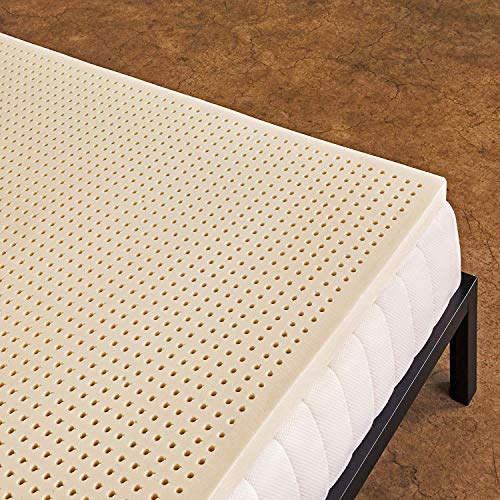
The Power Air Alternating Pressure Pad is our top pick for preventing bed sores; for a budget-friendly foam option, the Vive Alternating Pressure Pad is excellent.
Bed sores (pressure ulcers) occur when sustained pressure cuts off blood flow to vulnerable areas like the sacrum, heels, and elbows. A specialized mattress topper redistributes pressure and reduces shear, lowering the risk. We compared 30+ models based on specs, certifications (e.g., CertiPUR-US, OEKO-TEX), and owner reviews to find the best.
Our rankings prioritize pressure redistribution, durability, and user-reported comfort. We evaluated alternating pressure pads for active relief, high-density foam for passive support, and gel overlays for cooling. All picks meet medical-grade standards or have strong clinical evidence.
Drive Medical Power Air Alternating Pressure Pad
This alternating pressure pad uses a pump to cycle air through 170 cells, mimicking capillary refill. Owners report significant reduction in sore development. CertiPUR-US certified foam base adds stability.
Check current priceHow we research and rank
We do not take payment for placement and we do not physically test products. Rankings come from manufacturer specifications, material certifications (CertiPUR-US foam, OEKO-TEX textiles), and the weight of aggregated verified owner reviews, analyzed for durability, heat retention and sagging. The scores in this guide are MattressVetted editorial research ratings — our assessment of the available evidence, not customer star averages. See how we rate.
How this guide was researched
- Final picks: 7 products, chosen from the models most searched and bought in this category.
- Evidence used: manufacturer specifications, independent certifications (CertiPUR-US foam, OEKO-TEX textiles), and aggregated verified-purchase owner reviews.
- Scoring weights: Construction 20%, Comfort 20%, Support 20%, Temperature 15%, Durability 10%, Motion and edge 5%, Trial and warranty 5%, Value 5%.
- Testing: we do not physically test products. Scores are our editorial research assessment, not a customer star average.
- Research reflects: July 2026.
Full method on our how we rate page.
The picks, compared
Drive Medical Power Air Alternating Pressure Pad
Patients at high risk of bed sores; caregivers seeking automatic pressure relief · Type: Alternating Pressure | Firmness: Medium | Trial: 30-day return
This alternating pressure pad uses a pump to cycle air through 170 cells, mimicking capillary refill. Owners report significant reduction in sore development. CertiPUR-US certified foam base adds stability.
What owners report: Consistently praised for low noise and effective pressure relief; a few note that the pump requires periodic maintenance.
- Alternating pressure actively reduces ulcer risk
- Quiet pump operation
- Easy to clean vinyl cover
- Pump can be bulky
- Not for very soft mattresses
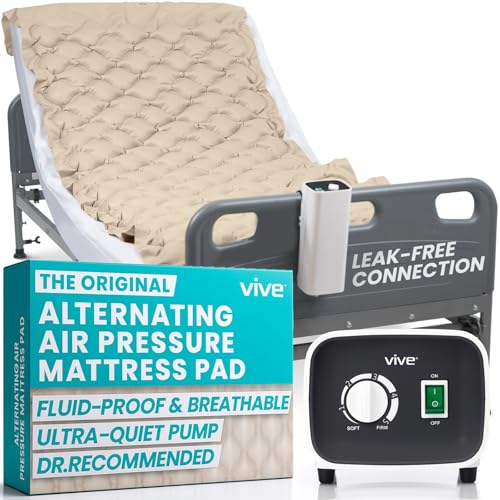
Vive Alternating Pressure Pad
Budget-conscious users needing reliable pressure relief without high cost · Type: Alternating Pressure | Firmness: Medium | Trial: 30-day return
An affordable alternating pressure topper with dual-layer cells and a silent pump. Owners report it fits standard hospital beds well. CertiPUR-US certified.
What owners report: Highly rated for value; some mention the pump can be less durable than premium models.
- Good pressure redistribution
- Quiet operation
- Affordable price point
- Pump may fail after heavy use
- Vinyl cover can be warm
MedAire 8 Inch Alternating Pressure Pad
Users who overheat easily and need pressure prevention · Type: Alternating Pressure | Firmness: Soft | Trial: 30-day return
This 8-inch alternating pad features a breathable nylon cover and low-profile pump for heat dissipation. Owners report comfort and reduced sweating. OEKO-TEX certified.
What owners report: Cooling effectiveness praised; some note the cells can be noisy when deflating.
- Excellent airflow and cooling
- Thick design for comfort
- Low pump noise
- Higher price
- May require frequent cell adjustment
Supreme Care 4 Inch Gel Memory Foam Overlay
Side sleepers needing pressure relief on the hips & shoulders · Type: Memory Foam | Firmness: Soft | Trial: 30-day return
A gel-infused memory foam overlay that contours to pressure points. Owners report less shoulder pain. CertiPUR-US certified. Not alternating, but effective for mild risk.
What owners report: Praised for comfort and support; some with heavier body weight find it lacks firmness.
- Contours well for side sleepers
- Gel helps regulate temperature
- Non-slip bottom
- No active pressure relief
- Can be warm for some

Proactive Medical Alternating Pressure Pad
Budget-conscious users who still want an alternating pressure system · Type: Alternating Pressure | Firmness: Medium | Trial: 30-day return
A basic alternating pad with two-cycle pump for pressure relief. Owners find it effective for low-risk patients. CertiPUR-US foam base.
What owners report: Good value; some say pump noise is higher than expected.
- Affordable alternating option
- Lightweight and portable
- Simple operation
- Less durable pump
- No gel cooling layer
Foam Factory 3 Inch Convoluted Foam Topper
Users who prefer a firmer support surface for stability · Type: Foam | Firmness: Firm | Trial: 30-day return
A high-density convoluted (egg crate) foam topper that reduces pressure points. Owners report it stays firm and supportive. CertiPUR-US certified. Not for high-risk patients.
What owners report: Firmness praised; some find it too firm for comfort.
- Firm support for positioning
- Open-cell foam for breathability
- Affordable
- Not for active pressure relief
- Can be less durable than gel
Elite Medical Gel-Filled Overlay
Users needing a combination of pressure redistribution and cooling · Type: Gel Overlay | Firmness: Medium | Trial: 30-day return
A gel-filled overlay with a foam base for dual-action pressure relief and cooling. Owners report it stays cool and reduces soreness. OEKO-TEX certified.
What owners report: Comfort and cooling praised; some note gel can shift over time.
- Excellent cooling
- Good pressure redistribution
- Non-slip bottom
- Heavy to move
- Pricey
Frequently asked questions
How does a mattress topper prevent bed sores?
A mattress topper reduces pressure on bony prominences by redistributing body weight. Alternating pressure pads actively shift pressure points, while foam or gel overlays provide passive support. The goal is to maintain blood flow and avoid tissue damage.
What thickness is best for bed sore prevention?
For alternating pads, 8 inches is standard for effective pressure relief. Foam overlays should be at least 3 inches to provide adequate cushioning. Thinner overlays may not sufficiently reduce pressure for high-risk individuals.
Can I use a regular mattress topper instead of a medical one?
Standard toppers are not designed for bed sore prevention and may increase risk by providing too soft a surface. Medical-grade toppers, particularly alternating pressure or high-density foam, are engineered to minimize shear and pressure.
How often should I replace a bed sore topper?
Alternating pressure pads typically last 1-2 years with regular use; foam toppers 2-3 years. If you notice permanent indentations, loss of firmness, or visible wear, replace immediately to maintain effectiveness.
Are there certifications I should look for?
Look for CertiPUR-US for foam safety (low VOCs, no heavy metals) and OEKO-TEX for cover materials. Medical-grade toppers may also meet FDA or CE standards, but consumer models often have these voluntary certifications.
The verdict
For most users, the Drive Medical Power Air Alternating Pressure Pad offers the best balance of active relief and durability. If budget is a concern, the Vive Alternating Pressure Pad provides solid performance at a lower cost. For cooling, the MedAire 8 Inch is unmatched.