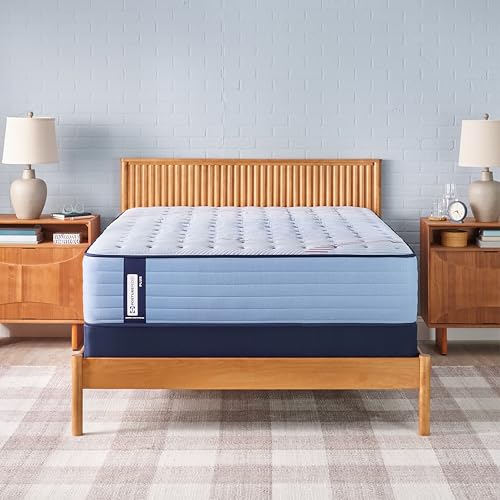
Pocket coils are springs wrapped individually in fabric so each moves on its own. Bonnell coils are older hourglass-shaped springs connected by wires so they move together. Pocket coils isolate motion, contour better, and are quieter, which suits couples and side sleepers. Bonnell coils are bouncier, cheaper, and durable but transfer more motion.
The core difference
| Pocket coils | Bonnell coils | |
|---|---|---|
| Design | Individually wrapped, move independently | Hourglass springs connected together |
| Motion isolation | Strong, good for couples | Weaker, motion travels across the bed |
| Contouring | Better, coils respond locally | Firmer, more uniform |
| Noise | Quieter | Can get squeaky over time |
| Cost | Higher | Lower, common in budget beds |
Which is right for you
If you share the bed and dislike feeling your partner move, pocket coils are the clear choice because each spring absorbs movement locally. Side sleepers also benefit from the closer contouring. Bonnell coils make sense on a tight budget or for someone who likes a firm, bouncy, traditional innerspring feel and sleeps alone.
Where each fits today
Most modern hybrids use pocket coils because they pair well with foam comfort layers for both support and pressure relief. Bonnell coils survive mainly in budget innerspring mattresses. For how coils combine with foams, see our mattress types guide, and compare pocket coils to another common type in continuous vs pocket coils.
Pick the bed on comfort and support with our mattress buying guide.
Frequently asked questions
Are pocket coils worth the extra cost?
For couples and side sleepers, usually yes, because the motion isolation and contouring are noticeably better. Solo sleepers on a budget may be fine with a simpler coil.
Do Bonnell coil mattresses last?
They can be durable, but they tend to transfer motion and may get noisier over time compared with pocket coils.
Which is better for couples?
Pocket coils, without much doubt. Independent springs keep one person’s movement from disturbing the other.