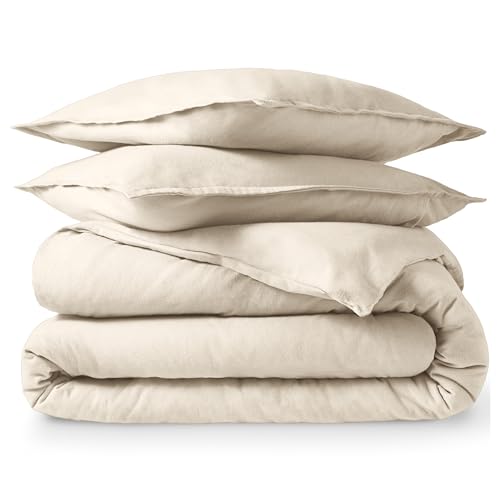
You should wash a duvet insert every 3 to 6 months if you use a duvet cover, and every 1 to 2 months if you don’t. More frequent washing is needed if you sleep hot, have allergies, or have pets. Over-washing can damage the fill, so protect your duvet with a quality cover.
Why a duvet insert needs regular washing
Even with a duvet cover, your duvet insert gradually collects dead skin cells, body oils, dust mites, and sweat. This buildup can trigger allergies, create musty odors, and degrade the fill material over time. A duvet cover catches most of the surface dirt, but moisture and fine particles still migrate through. Without a cover, the insert absorbs everything directly, which is why it needs washing more often. The goal isn’t just cleanliness, it’s preserving the loft and insulating power of the fill.
How to tell if your duvet insert needs washing
- Smell test: If you notice a musty or sour odor when you fluff the duvet, it’s time to wash.
- Visible stains or yellowing: Body oils and sweat cause discoloration, especially around the edges.
- Clumping or flat spots: Trapped dirt and oils cause fill to mat down, reducing warmth.
- Allergy flare-ups: Sneezing, stuffiness, or itchy eyes at night can mean dust mites or allergens have accumulated.
- Pet or spill accidents: Any liquid or pet mess means immediate washing is needed.
What to do: How to wash a duvet insert correctly
Check the care tag first, some down duvets require dry cleaning, while most synthetic and down duvets can be machine washed. Use a front-loading machine (top-loaders with an agitator can tear seams). Wash on a gentle cycle with warm water and a small amount of mild detergent. Skip fabric softener, as it coats fibers and reduces loft. For down inserts, add a second rinse cycle to remove all soap residue.
Drying is the most critical step. Use low heat and toss in two clean tennis balls or dryer balls to break up clumps. Dry until completely fluffed, this can take 2 to 3 cycles. Any remaining moisture leads to mildew. If your duvet is too large for your home machine, take it to a laundromat with commercial-size machines. For a deeper comparison of duvet types, see our duvet guide.
Common mistakes people make
- Washing too often: Washing a duvet insert more than every 3 months (with a cover) unnecessarily stresses the fabric and fill.
- Using hot water: Hot water can shrink or damage synthetic fills and cause down to clump permanently.
- Overloading the dryer: A cramped dryer won’t allow the duvet to tumble freely, leading to lumpy fill.
- Ignoring the cover: Washing the duvet insert but not the cover weekly defeats the purpose, the cover is your first line of defense.
- Bleaching: Bleach destroys down and weakens synthetic fibers. Use oxygen-based stain removers instead.
When to consider replacing instead of washing
If your duvet insert is more than 5-7 years old and has lost significant loft, or if washing no longer removes stains or odors, it’s likely time for a new one. A worn-out duvet won’t insulate well, and washing a compromised insert can cause fill to shift or leak out. If you’re looking for a fresh start, browse our comforter and duvet options.
| Fill type | Wash frequency (with cover) | Wash frequency (no cover) | Drying tips |
|---|---|---|---|
| Synthetic (polyester) | Every 3-4 months | Every 1-2 months | Low heat, dryer balls, fluff every 20 min |
| Down (goose/duck) | Every 4-6 months | Every 2-3 months | Low heat, tennis balls, extra rinse cycle |
| Wool | Every 6 months (spot clean only) | Every 3 months (dry clean preferred) | Air dry flat, no heat |
| Bamboo/plant-based | Every 3-4 months | Every 1-2 months | Low heat, remove promptly to prevent wrinkles |
Frequently asked questions
Can I wash my duvet insert in a top-loading washing machine?
Only if the machine has no center agitator and is large enough for the duvet to move freely. A standard top-loader with an agitator can tear seams and cause uneven washing. A front-loader or commercial machine is safer for queen and king sizes.
How often should I wash the duvet cover?
Wash your duvet cover every 1 to 2 weeks, just like your regular bed sheets. This keeps most dirt and oil away from the insert, allowing you to wash the insert much less often. If you have allergies or pets, weekly washing is ideal.
What happens if I never wash my duvet insert?
Over time, the buildup of sweat, oils, and dust mites will cause the duvet to smell, flatten, and lose its insulating ability. It can also become a breeding ground for allergens and bacteria, potentially worsening allergies or skin irritation. A well-cared-for duvet lasts years longer than a neglected one.