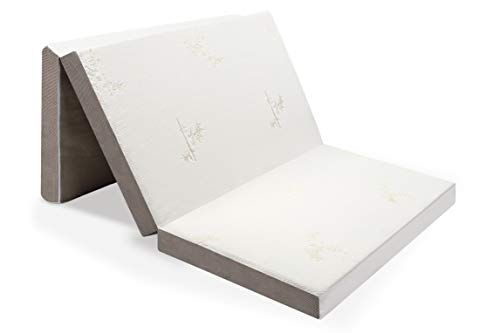
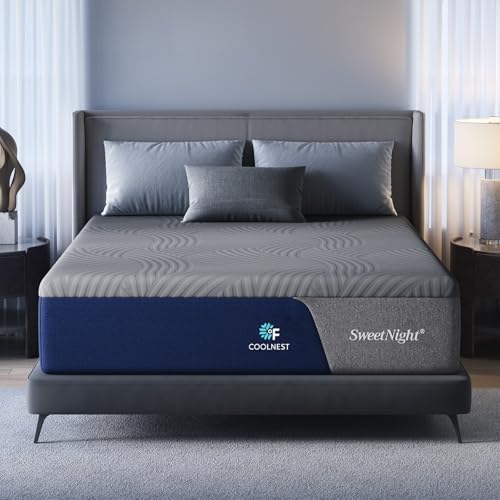
A quilted mattress has a stitched, padded top layer (often with foam or fiber) sewn directly to the cover, creating a soft, plush feel. A tufted mattress uses vertical ties or buttons pulled through the mattress layers to hold the fill in place, creating a firmer, more structured surface with visible indentations. Quilting adds comfort; tufting prevents shifting.
Why it happens
Manufacturers use quilting and tufting to solve different construction problems. Quilting is a surface treatment: a thin layer of foam, fiber, or cotton is stitched to the mattress cover to add a pillow-like feel without changing the core support. This is common in innerspring and hybrid mattresses to soften the initial contact point.
Tufting is a structural technique. The manufacturer pulls thread, yarn, or fabric buttons completely through the mattress (top to bottom) and anchors them. This compresses the internal layers together, preventing fill materials like wool, cotton, or latex from shifting or clumping over time. Tufting is typical in natural latex mattresses, wool mattresses, and high-end handcrafted beds.
How to check
- Look at the surface. A quilted mattress has continuous stitching in patterns (diamonds, channels, circles) on the top panel. The stitching only goes through the cover and the thin padding layer beneath it.
- Look for buttons or deep dimples. A tufted mattress has visible buttons, knots, or deep vertical indentations across the surface. These are where the tufting ties pass through the entire mattress.
- Press the surface. On a quilted mattress, the top feels soft and plush immediately. On a tufted mattress, the surface feels firmer and more uniform because the tufting compresses the layers.
- Check the sides. Quilting only affects the top panel. Tufting often creates visible pulls or dimples on the side panels as well, especially on high-end models.
Common mistakes
- Thinking tufting equals softness. Many people assume tufted beds are plush because they see deep quilting-like patterns. In reality, tufting creates a firmer, more supportive surface because it compresses the fill.
- Assuming all quilting is the same. Cheap quilting uses thin fiberfill that flattens within months. Higher quality quilting uses denser foams or natural fibers, which hold up longer. Check the foam density in the quilt layer if you want durability.
- Ignoring the mattress core. Quilting and tufting are surface and construction features, not indicators of overall firmness. A quilted mattress on a firm coil unit can feel medium-firm; a tufted latex mattress on a soft core can feel plush. Always check the core materials and firmness rating.
- Believing tufting is always better. Tufting prevents shifting, but it also creates pressure points for some sleepers, especially side sleepers who need more give at the surface. Quilting can be more pressure-relieving if the padding is thick enough.
When a new mattress makes sense
If your current mattress has noticeable lumps, sagging, or uneven support, the construction type may be failing. A tufted mattress that has lost its tufting (buttons popping off, fill bunching up) is likely beyond repair. A quilted mattress where the top layer has flattened completely (you can feel the coils or foam core through the cover) is also a candidate for replacement.
Consider your sleep position. Side sleepers often prefer the softer initial feel of a well-quilted mattress or a hybrid with a plush quilted top. Stomach and back sleepers may benefit from the even support of a tufted mattress, especially one with natural latex or high-density foam. If you want a mattress that resists body impressions over time, a tufted model with high-quality materials is a strong choice. For budget-friendly options, look for a mattress with a dense quilted foam layer rather than thin fiberfill.
| Feature | Quilted | Tufted |
|---|---|---|
| Surface feel | Soft, plush, pillow-like | Firm, uniform, structured |
| Construction | Stitching through top cover only | Vertical ties through entire mattress |
| Durability concern | Quilt layer can flatten | Buttons can pop or fabric can tear |
| Best for | Side sleepers, pressure relief | Back/stomach sleepers, support |
| Common in | Innerspring, hybrid, budget foam | Latex, wool, high-end natural |
Frequently asked questions
Can a mattress be both quilted and tufted?
Yes, though it is less common. Some high-end mattresses have a quilted top panel for initial softness and tufting through the main support layers to prevent shifting. The quilting is usually on the surface only, while the tufting goes deeper.
Which type lasts longer, quilted or tufted?
Tufted mattresses generally last longer because the construction prevents internal materials from shifting and forming lumps. However, the quality of materials matters more. A tufted mattress with low-density foam will still degrade faster than a quilted mattress with high-density foam and strong stitching.
Does tufting make a mattress firmer?
Yes, tufting compresses the internal layers, which increases the overall firmness of the mattress. A tufted mattress will feel firmer than the same materials used in an un-tufted or quilted construction. If you need a soft mattress, look for a tufted model with a plush comfort layer or choose a quilted design instead.